My Principles of Interior Curation
I've spent a long time trying to articulate what makes certain rooms feel finished while others, despite having all the right pieces, still feel unsettled. The difference isn't budget or square footage. It's curation.
Curation, in the context of a home, is the practice of deliberate selection and arrangement. It's not about following trends or filling every surface. It's about understanding the underlying structure of a space and making intentional choices that reinforce a singular vision.
When I moved into my current home, I brought too much with me. Furniture from previous apartments, art that no longer resonated, objects I'd collected but never truly loved. The rooms looked decorated, but they didn't feel coherent. I started removing things. Not because they were ugly or cheap, but because they didn't serve the atmosphere I wanted to create.
That process taught me that interior curation operates on a few fundamental principles. These aren't rigid rules. They're frameworks that help you make clearer decisions about what stays and what goes.
Why Curation Matters
Most of us accumulate. We buy things we like in the moment, inherit pieces from family, hold onto items "just in case." Over time, our homes become repositories rather than reflections. The visual noise compounds until we can't see what we actually have.
Curation cuts through that. It asks you to look at your space with fresh eyes and evaluate each element on its merit. Does this chair support the room's function? Does this color palette create the mood I'm after? Does this object earn its place?
The goal isn't minimalism for its own sake. It's intentionality. A curated room might have ten items or fifty, but each one is there for a reason.
The Four Foundational Principles
Over the years, I've identified four principles that guide how I approach every room in my home. They work together to create spaces that feel both complete and calm.
Restraint: The Art of Editing
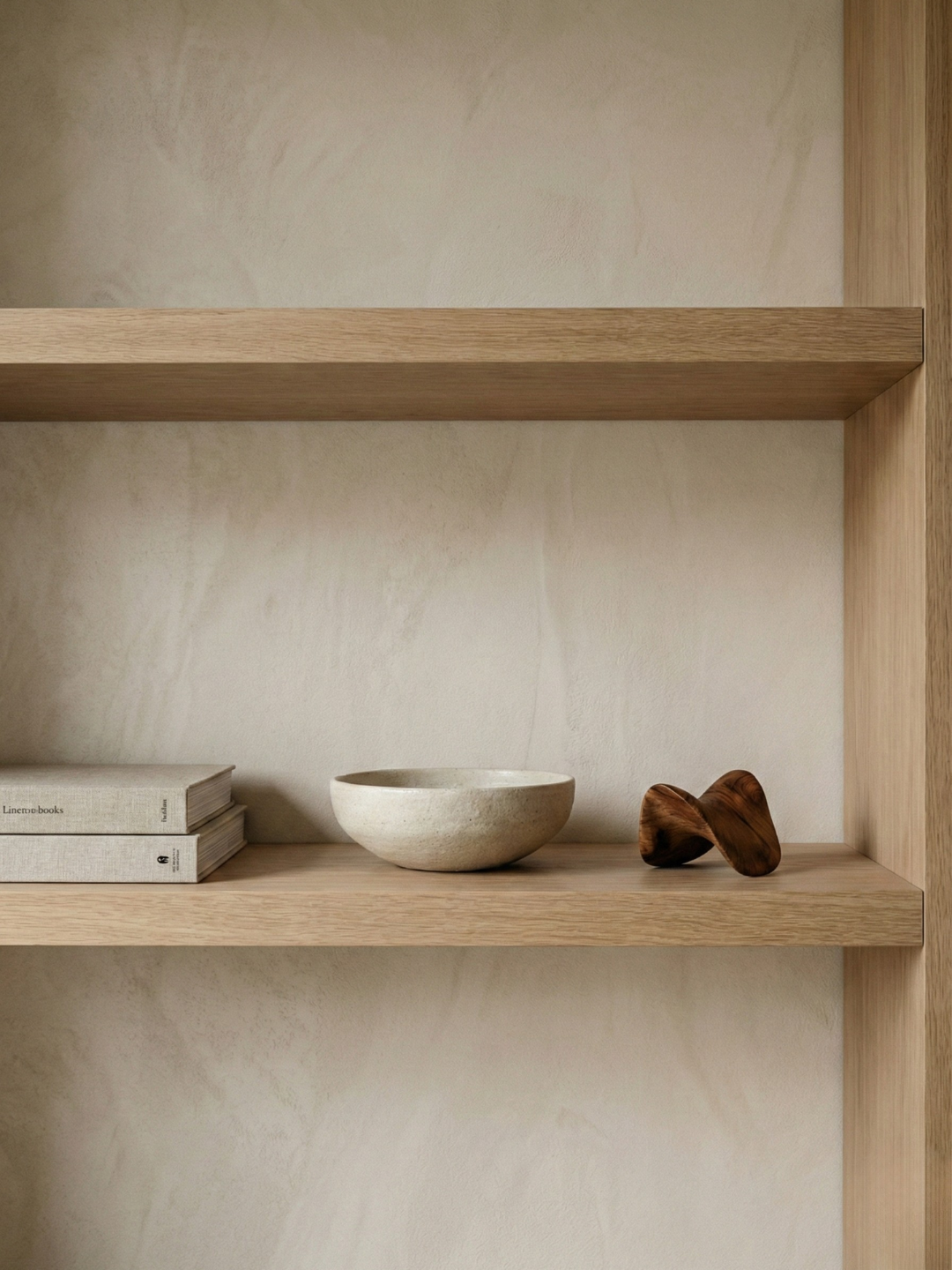
Restraint is about knowing when to stop. It's the discipline to leave a shelf half-empty, to resist the urge to fill every corner, to choose one statement piece instead of three competing ones.
I used to think more was more. If I loved minimalist ceramics, why not display my entire collection? But a room full of beautiful things isn't necessarily beautiful. Restraint creates breathing room. It allows your eye to rest on what matters.
The practice of restraint requires regular editing. I revisit each room seasonally and ask myself what can be removed. Sometimes it's a decorative object that no longer feels relevant. Sometimes it's a piece of furniture that's blocking the natural flow. The act of subtracting often reveals what should have been the focus all along.
Read more: The Rule of Restraint
High-Low Composition: Investing Strategically
Not everything in your home needs to be expensive, but certain pieces deserve investment. The sofa you sit on daily. The dining table where you gather. The bed frame that anchors your bedroom.
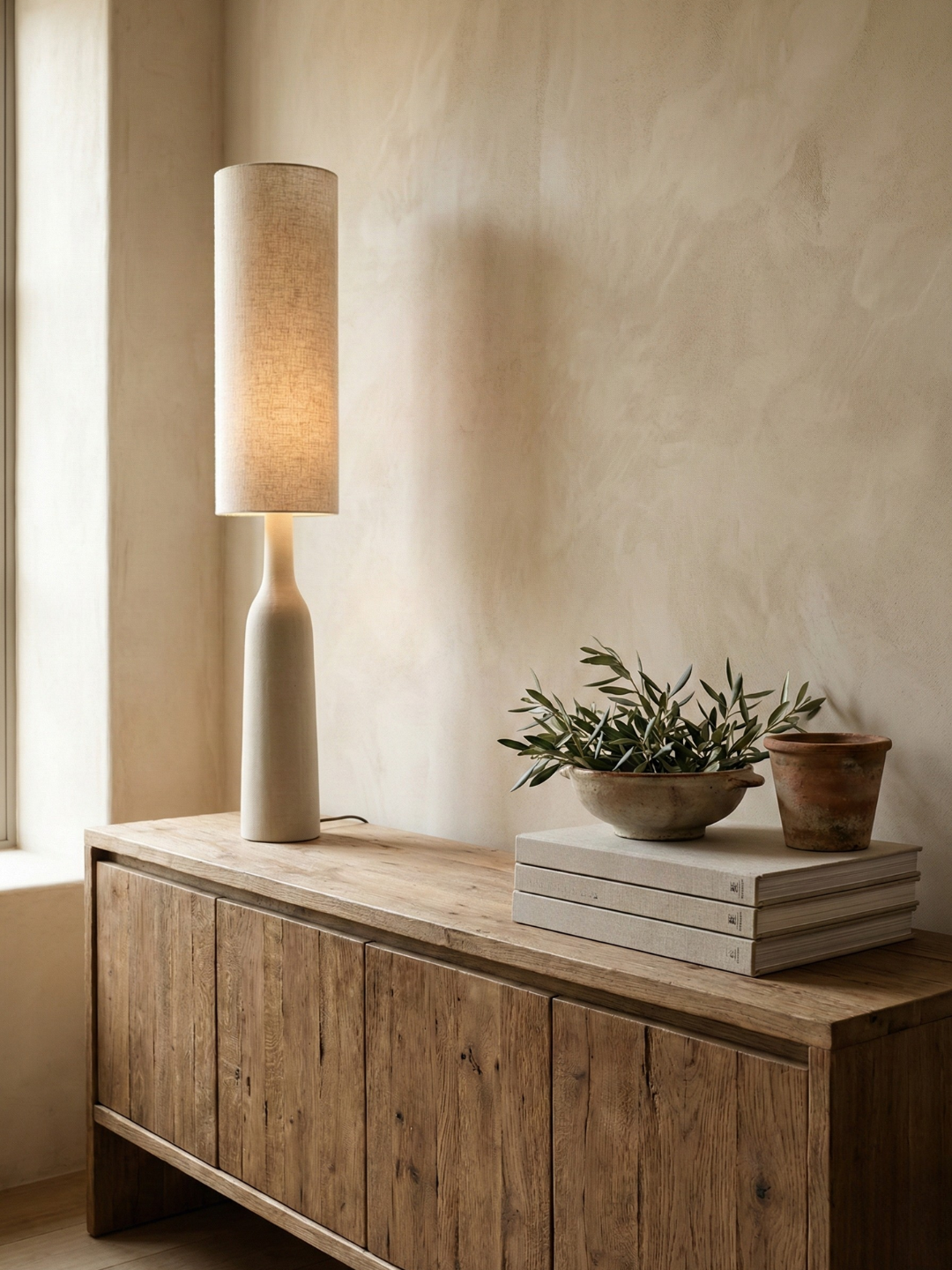
High-low composition is the practice of pairing these investments with more accessible pieces. A vintage Danish credenza alongside an IKEA lamp. A designer chair next to a simple linen throw from a local shop. The contrast creates visual interest without the need for everything to be precious.
I learned this approach by necessity. Early in my career, I couldn't afford to furnish an entire room with high-end pieces. I had to be strategic. That constraint taught me to identify where quality truly matters and where a well-chosen affordable option works just as well.
Read more: High-Low Composition
Scale and Proportion: Getting the Bones Right
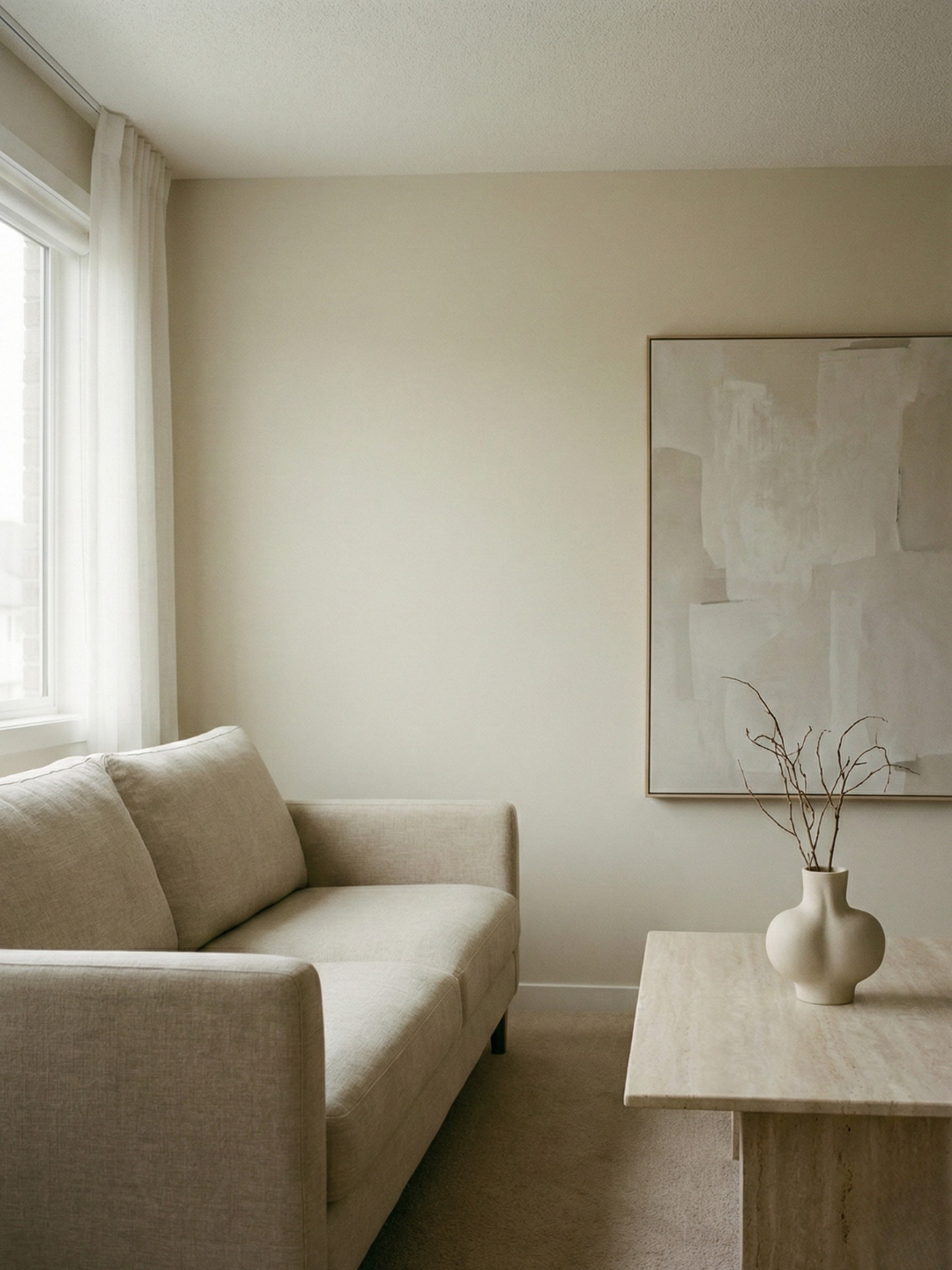
You can have the most beautiful furniture in the world, but if it's the wrong size for the room, it won't work. Scale and proportion are the invisible architecture of a space. They determine whether a room feels balanced or awkward, spacious or cramped.
I see this mistake often: a small sofa floating in a large living room, or an oversized sectional dwarfing a modest space. The style might be perfect, but the proportions are off, and the room never quite settles.
Understanding scale means considering the relationship between furniture, architecture, and negative space. It's about choosing pieces that match the volume of the room and creating visual weight that feels distributed, not lopsided.
Read more: Scale and Proportion
Visual Signature: Creating Continuity
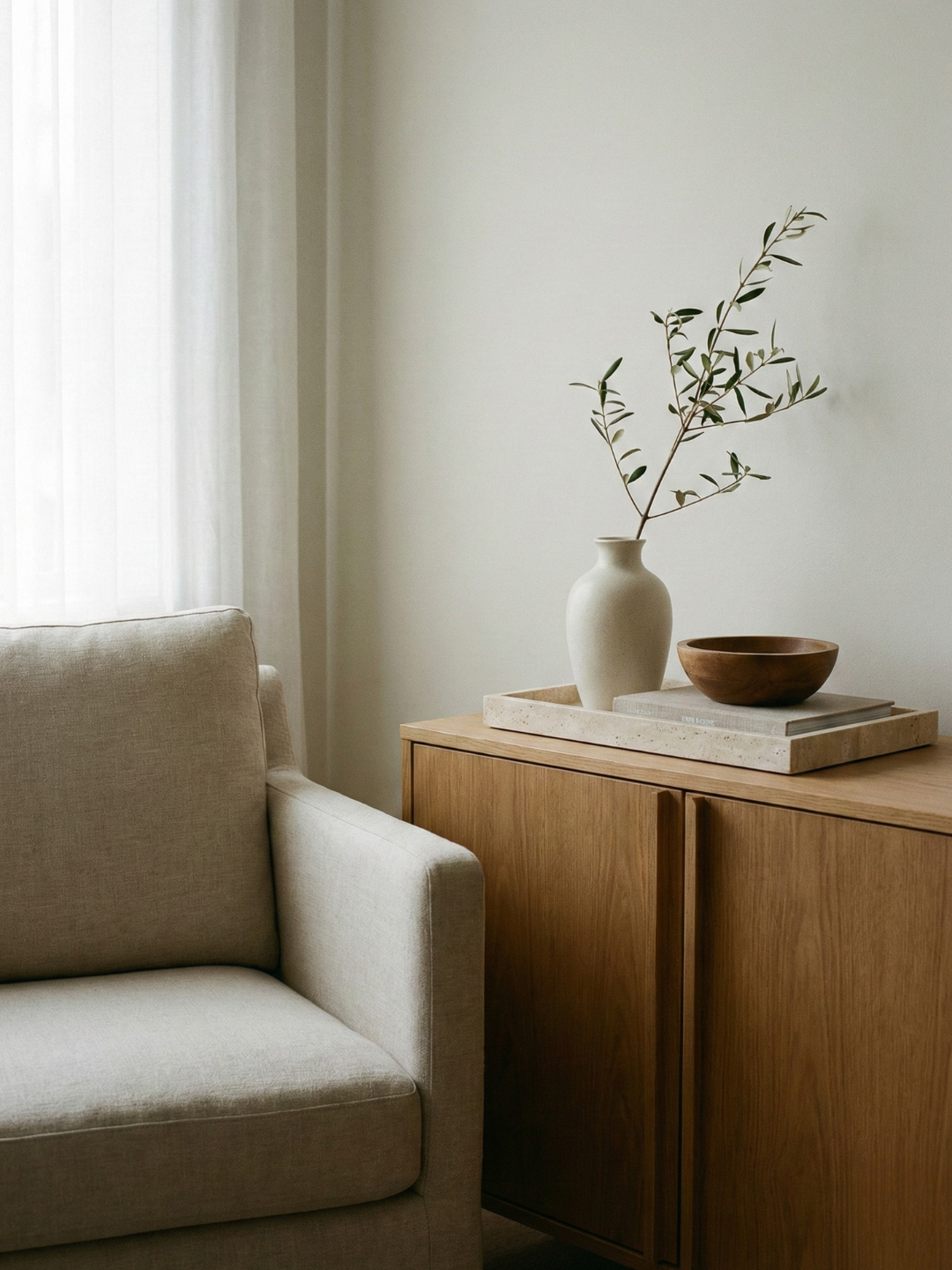
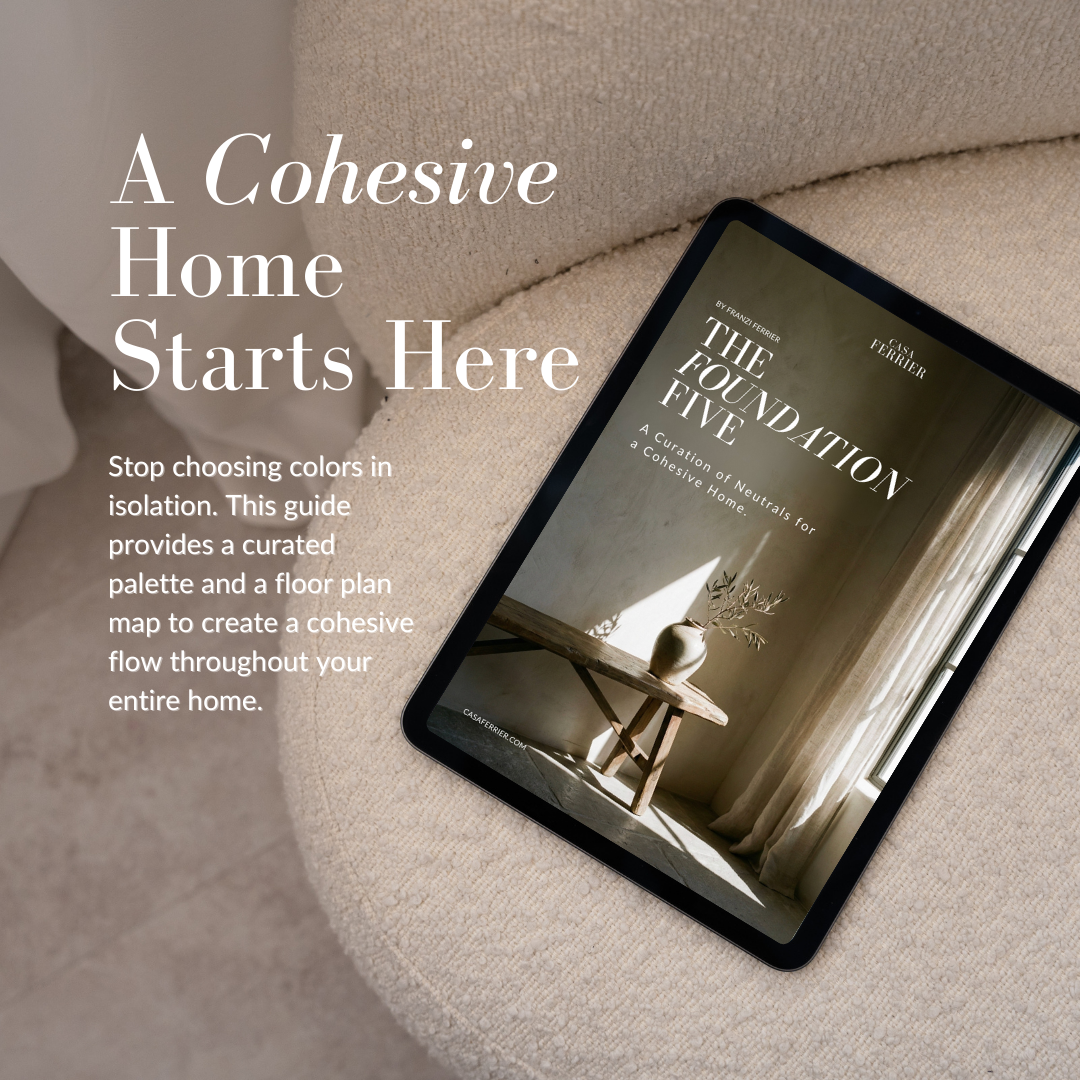
Your home should feel like a cohesive experience, not a series of disconnected rooms. A visual signature is the thread that ties everything together. It might be a consistent color palette, a recurring material, or a particular design sensibility that shows up in subtle ways throughout your space.
For me, it's texture and tone. I gravitate toward warm neutrals, natural materials, and pieces with quiet presence. That signature doesn't mean every room looks identical. My bedroom has a different function than my living room. But there's a recognizable aesthetic that unifies them.
Developing a visual signature takes time. It requires you to notice what you're repeatedly drawn to and to be honest about what actually reflects your taste versus what you think you should like.
Read more: Visual Signature
Putting Principles into Practice
These principles aren't meant to be applied in isolation. They overlap and inform each other. Restraint helps you identify which high-investment pieces are worth it. Understanding scale prevents you from cluttering a room in an attempt to fill space. A visual signature gives you a filter for every purchasing decision.
The work of curation is ongoing. As your life changes, your space should adapt. What worked five years ago might not work now. The furniture that served you as a couple might not fit a growing family. The aesthetic you loved in your twenties might feel incongruent in your forties.
I revisit these principles regularly, not as a checklist, but as a way to stay connected to how my home feels. When a room starts to feel off, I return to the fundamentals. Usually, I've violated one of these principles without realizing it. Too much visual noise. A piece that's too small. An object that doesn't align with my signature. The fix is often simpler than I expect.
The End Goal
A curated home isn't a showroom. It's a space that functions well and feels authentically yours. It's a place where you can think clearly, rest deeply, and move through your day without unnecessary friction.
The principles of interior curation give you a framework for making those kinds of spaces. They help you see past trends and marketing, past what everyone else is doing, and tune into what actually works for the way you live.
That's the work. Not perfection, but alignment.
Until next time,
Franzi